What is a Solution Testing Plan Template?
A Solution Testing Plan Template provides a structured framework for planning and executing a controlled test of a proposed solution before full implementation. It defines the test objectives, scope, success criteria, data collection method and decision rules.
When to use a Solution Testing Plan Template
Use it in the Improve phase, after selecting your solution and before full-scale implementation. Any solution that carries significant risk, cost or operational impact should be tested in a controlled environment before go-live.
Who should use a Solution Testing Plan Template
- Black Belts and Green Belts — planning and executing solution tests in the Improve phase before full implementation
- Process owners — defining the acceptance criteria for a proposed change to their process
- Operations and quality managers — reviewing test plans and approving the decision criteria before testing begins
- Engineering and technical teams — designing controlled tests for process or system changes
Vote yes and we’ll prioritise a quick walkthrough showing you exactly how to use it.
How to use a Solution Testing Plan — step by step
- 1State the hypothesis
What do you expect the solution to achieve? Write a specific, measurable prediction: 'Solution X will reduce defect rate from 4% to below 1.5%.'
- 2Define the test scope
Which part of the process, which location, which time period and which team will be included in the test?
- 3Set the success criteria
Define in advance what constitutes a pass or fail. Agree the threshold before seeing any data.
- 4Design the data collection approach
What data will you collect, how frequently, who will collect it and how will you compare it to the baseline?
- 5Plan for risks during testing
What could go wrong during the test? How will you monitor for adverse effects and what is the exit criteria if the test needs to be stopped?
- 6Run the test for a sufficient duration
Allow enough time to see the effect — typically 2–4 weeks for operational processes to account for variation.
- 7Analyse results and make a go/no-go decision
Compare test results against success criteria. Document the decision and rationale before proceeding to full implementation.
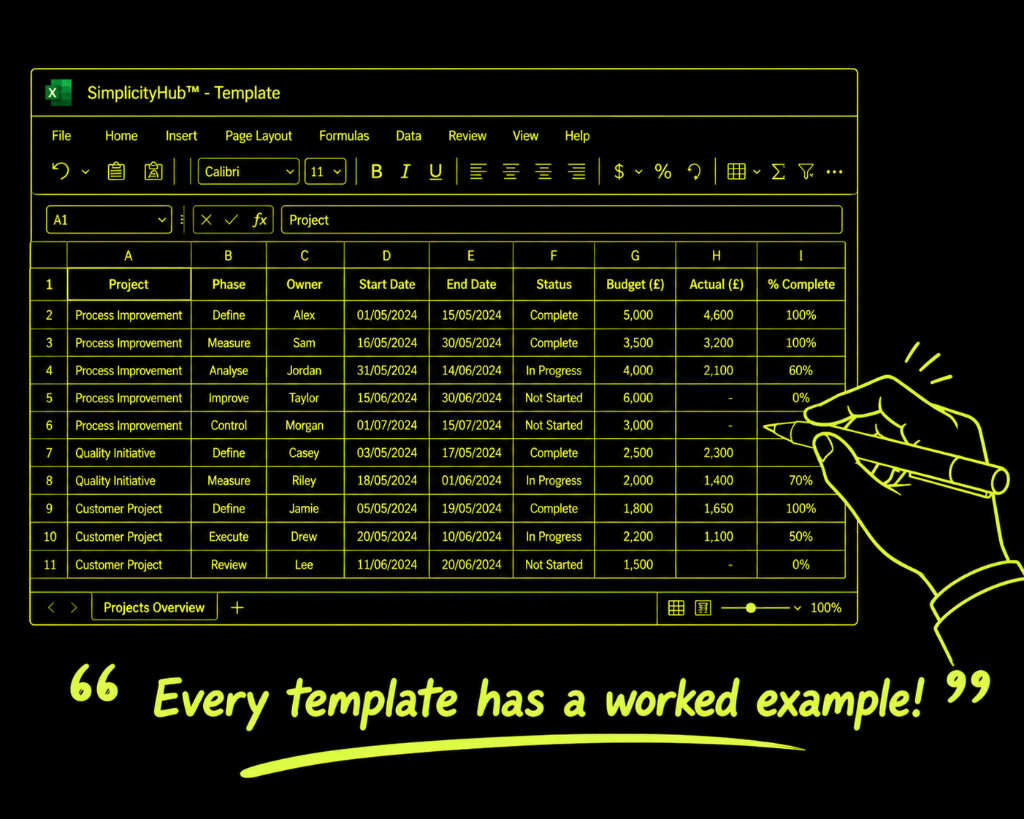
Worked example — New Dispensing Procedure Test
A pharmacy team tested a new dispensing procedure on one of three dispensing bays for 3 weeks — setting a success criterion of zero dispensing errors vs a baseline rate of 1.8% — and confirmed the success criterion was met before rolling out to all bays.
Common mistakes — and how to avoid them
No predefined success criteria. Without agreed success criteria, the team will argue about whether the test passed. Define the threshold before any data is collected.
Testing for too short a period. A 2-day test of a weekly cycle process is meaningless. The test duration must be long enough to observe the full range of normal process variation.
Not comparing to a control. Where possible, run the test alongside the unchanged process to control for external factors that might explain apparent improvements.
Confirming the solution before testing it. If the team is certain the solution will work, the test becomes a formality. Genuine uncertainty is the point of testing — design the test to be capable of failing.
Tips for getting better results
Brief the test participants fully. Everyone involved in the test must understand the protocol, the data collection requirements and what to do if something goes wrong.
Document everything during the test. Notes, observations and unexpected events during the test are valuable data. Don't rely on memory.
Have a rollback plan ready. If the test reveals the solution is making things worse, you need to be able to revert to the previous state quickly. Plan the rollback before starting.
Frequently asked questions
Test vs pilot?
A test evaluates whether the solution works at all. A pilot is real-world implementation. Test first, pilot if successful.
What should success criteria be?
Defined in measurable terms before testing begins. Vague criteria lead to inconclusive results.
Who reviews the results?
The project team and sponsor. Agree in advance what results justify moving to pilot.
What if the test fails?
Document it and use the learning to refine the solution.
Advanced Toolkit Packs — available now
Structured, ready-to-use template packs designed for real improvement work. Pick the pack that matches your project and get started straight away.
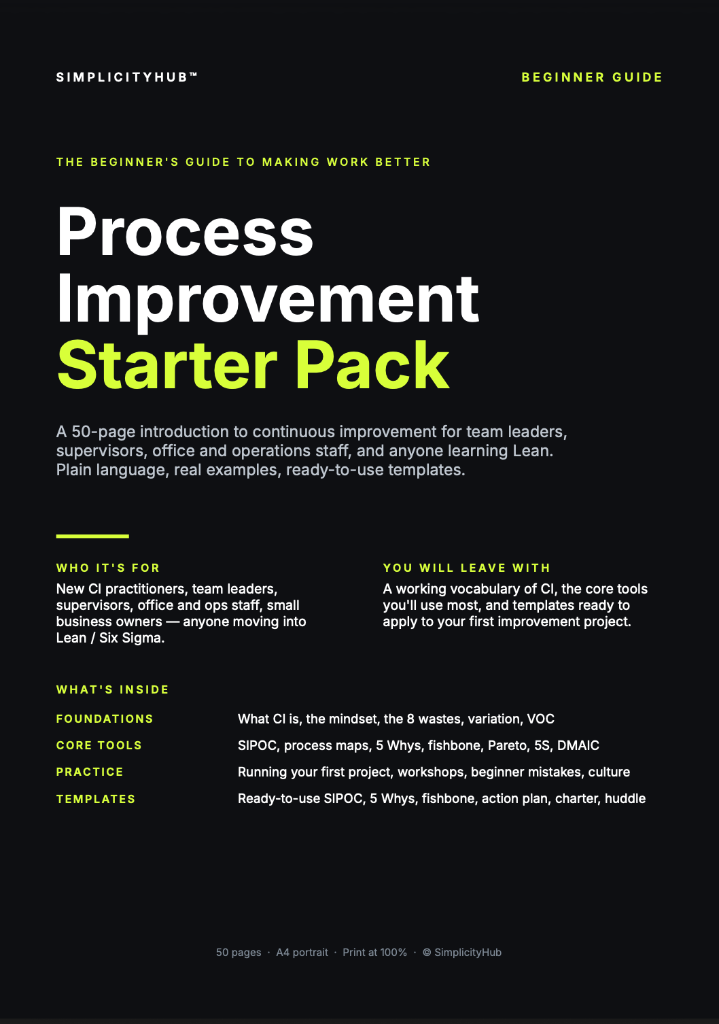
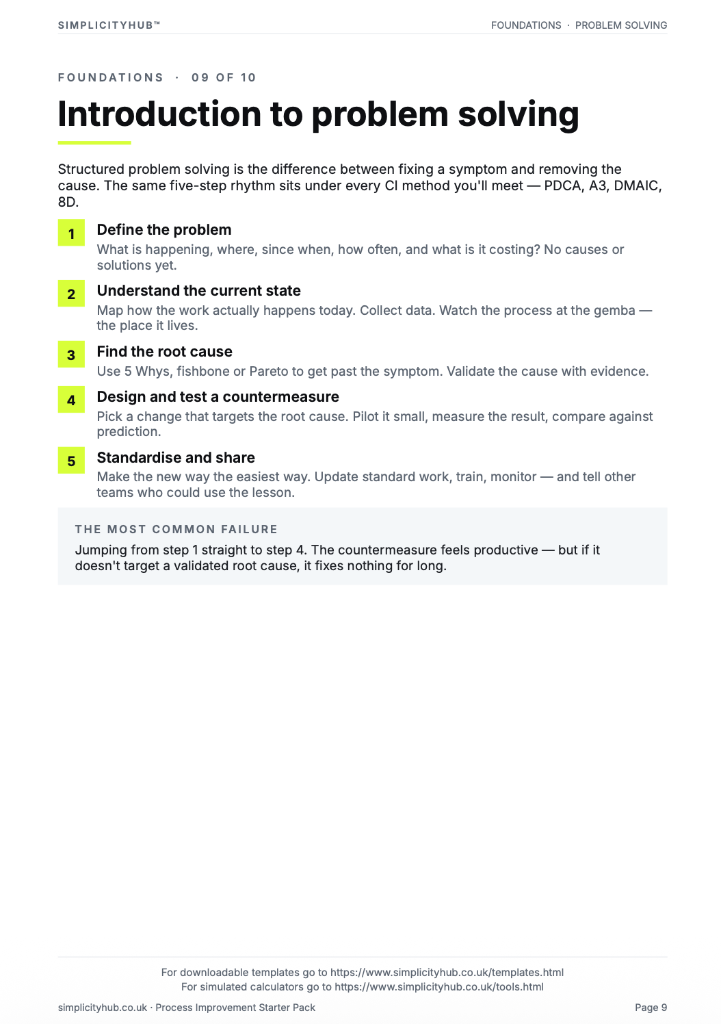
Process Improvement Starter Pack
A starter pack for identifying improvement opportunities, measuring baselines and planning action.
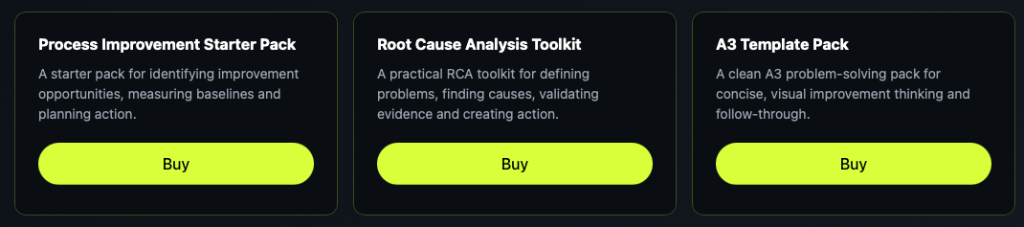
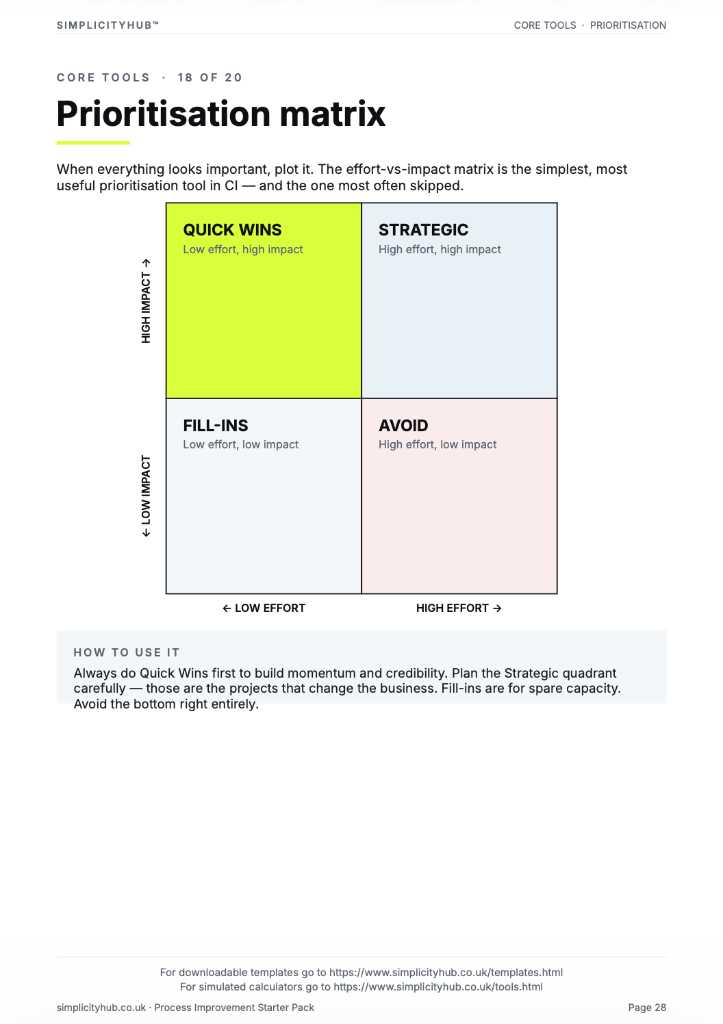
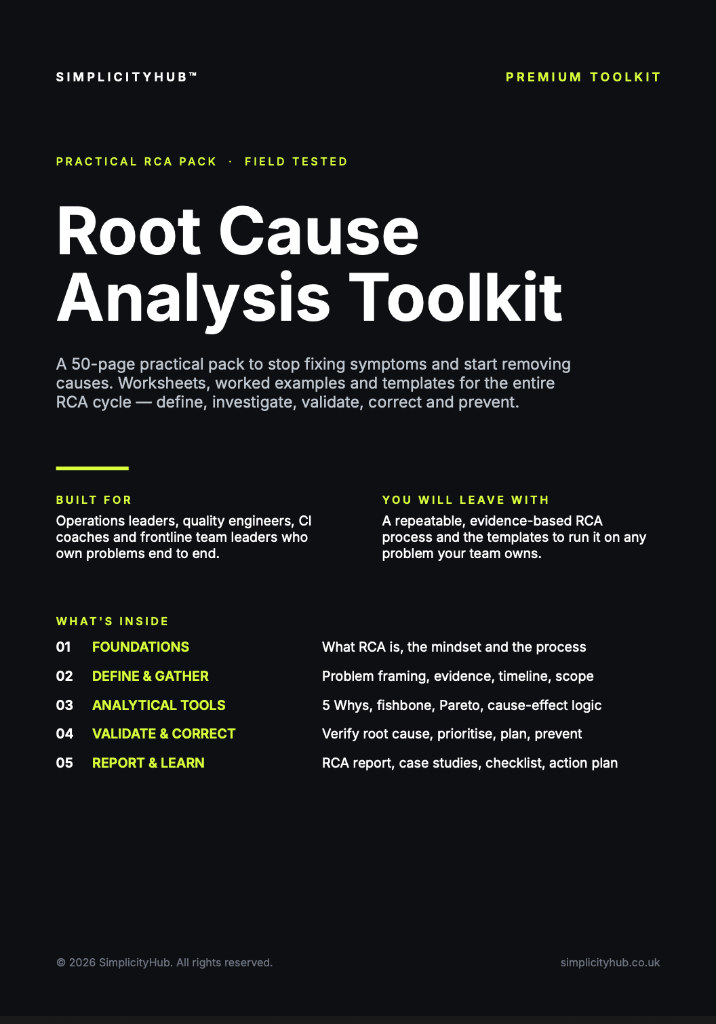
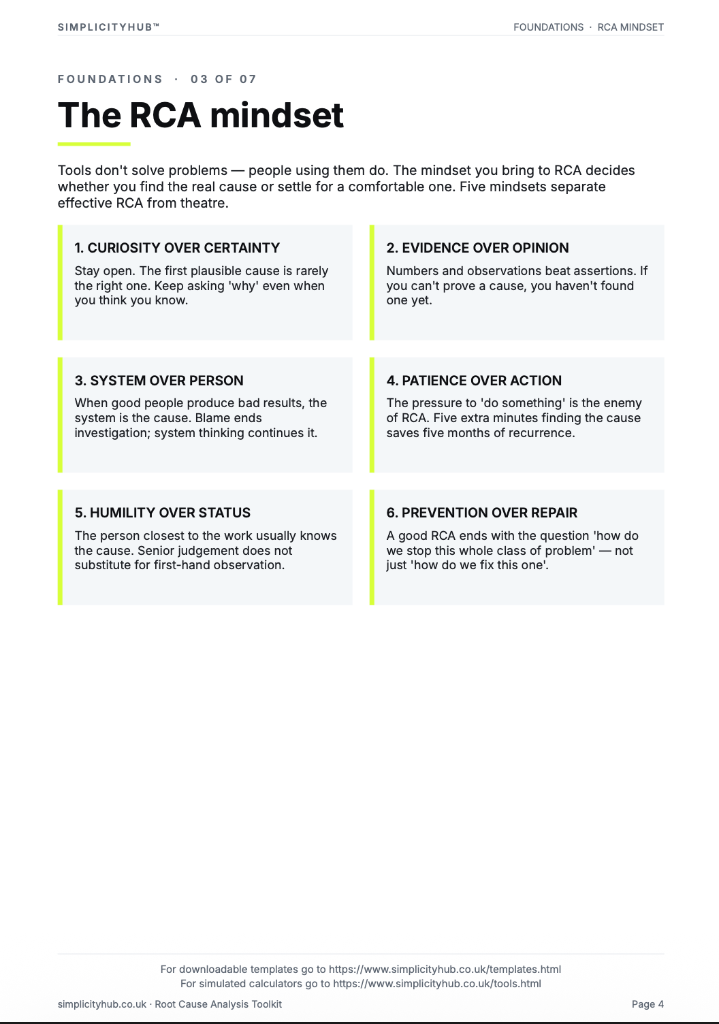
Root Cause Analysis Toolkit
A practical RCA toolkit for defining problems, finding causes, validating evidence and creating action.
A3 Template Pack
A clean A3 problem-solving pack for concise, visual improvement thinking and follow-through.