What is a Sustainability Plan Template?
A sustainability plan defines exactly how an improved process will be maintained, monitored and protected from regression after the project team has moved on. It covers ownership, monitoring cadence, escalation paths, training requirements and the review schedule.
Process improvement without a sustainability plan is a temporary fix. Research consistently shows that without formal sustainability planning, 60–80% of process improvements regress within 12 months of project closure.
The sustainability plan is completed in the Control phase and is handed over to the process owner alongside the control plan and SOP as the formal package of ongoing management tools.
When to use a Sustainability Plan Template
Build the sustainability plan before you close the project — ideally during the Improve phase as you are finalising the solution. Use it when:
- A project is approaching the Control phase and handover to operations is imminent
- Previous projects have improved a process only to see it revert within months
- The sponsor is asking how the improvement will be protected after the project closes
- The process owner needs a clear framework for ongoing management of the improved process
Who should use a Sustainability Plan Template
- Green Belts and Black Belts — as a mandatory Control phase deliverable before project closure
- Process Owners and Operations Managers — to understand their ongoing responsibilities after handover
- CI Managers — to verify that completed projects have credible sustainability plans before the CI saving is claimed
- MBBs and CI Coaches — to assess the long-term robustness of improvement programme outcomes
Vote yes and we’ll prioritise a quick walkthrough showing you exactly how to use it.
How to build a Sustainability Plan
Build the sustainability plan with the process owner — not for them. If the process owner does not understand and commit to the plan, it will exist only on paper. Their buy-in is what makes it real.
How to build a Sustainability Plan — step by step
-
1Name the process owner post-handover
Identify the single person accountable for the process performance after the project closes. This person owns the sustainability plan. They must agree to take it on before you close.
-
2Define the ongoing KPIs
What will be measured to confirm the improvement is sustained? Use the same metrics from the goal statement and control plan. Document the target and the acceptable range.
-
3Set the monitoring frequency
How often will KPIs be reviewed? Weekly dashboard review, monthly audit, quarterly deep dive? Match the frequency to the risk level of the process — higher risk needs more frequent monitoring.
-
4Define the escalation threshold and path
At what point does a KPI deviation trigger an escalation? Who is notified first, second, and third? Write this as a clear decision tree so the process owner can act without needing to involve the project team.
-
5Capture training requirements
What training is needed for new starters or returning staff? Is there an SOP, a briefing document, a video? Who delivers the training and how is completion verified?
-
6Schedule formal reviews
Plan specific review dates: 30-day check, 90-day review, 12-month anniversary audit. Put these in the diary before the project closes. They are far less likely to happen if not pre-scheduled.
-
7Define when the CI team can be called back in
Agree the conditions under which the project team or CI function should be re-engaged: sustained KPI breach, process change that invalidates the current controls, or a new root cause emerging.
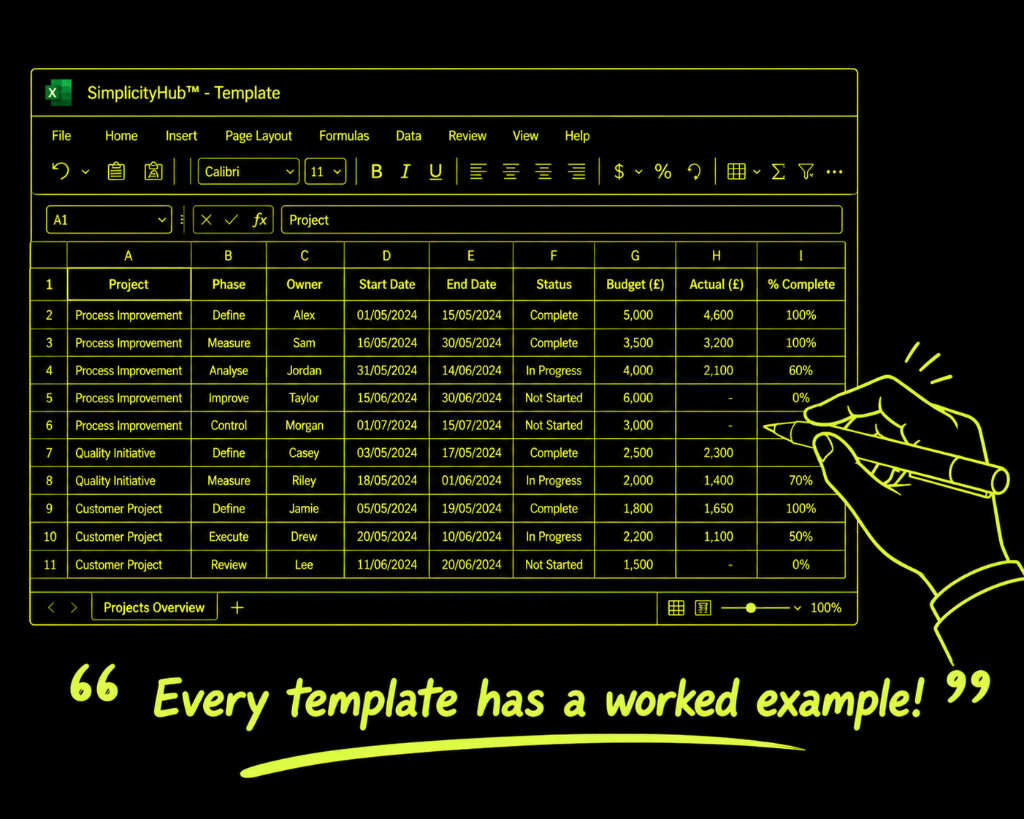
Worked example — Complaint Process Sustainability Plan
A completed sustainability plan for a complaint handling improvement, including process owner, KPIs, monitoring schedule, escalation thresholds and review dates.
Common mistakes — and how to avoid them
No named process owner. If the sustainability plan names a team rather than a person, no one is accountable. A named individual with a clear remit is the foundation of any sustainability plan.
KPI monitoring that depends on the project team. If the only person who knows how to produce the KPI report is the project lead, the monitoring will stop when they move on. Transfer knowledge and system access before closure.
No escalation threshold. A plan that says 'monitor monthly' without specifying what triggers action is incomplete. Define the number — if the weekly average exceeds 3.5 days for two consecutive weeks, escalate to the Operations Manager.
Pre-scheduled reviews that never happen. Reviews scheduled before the project closes are at risk of being cancelled when other priorities take over. Build them into the process owner's regular management calendar, not just as a one-off event.
Tips for getting better results
Link sustainability to performance reviews. If the process owner's performance objectives include maintaining the improved KPI, sustainability becomes a professional priority rather than an optional extra.
Build the 90-day review into the project plan. Schedule the first formal review before the project closes and add it to the sponsor's diary. A review that is already booked is far more likely to happen.
Create a one-page summary for the process owner. The full sustainability plan may run to several pages. Create a one-page visual summary showing the key KPIs, thresholds and escalation path that can be posted on the team board.
Download the Sustainability Plan Template
A clean, editable Excel template for immediate use — structured, professional and ready to fill in.
Frequently asked questions
Why do improvements fail to sustain?
Controls not embedded, training not completed, staff turnover without knowledge transfer, and process owner not genuinely owning the new standard.
What should the plan include?
Training plan, updated documentation, monitoring schedule, audit plan, escalation path, and a review date.
How long should sustainability be actively monitored?
Six to twelve months post-implementation minimum.
What is the process owner role?
Critical. They must genuinely own the new standard — conducting audits, acting on results, and updating documentation.
Advanced Toolkit Packs — available now
Structured, ready-to-use template packs designed for real improvement work. Pick the pack that matches your project and get started straight away.
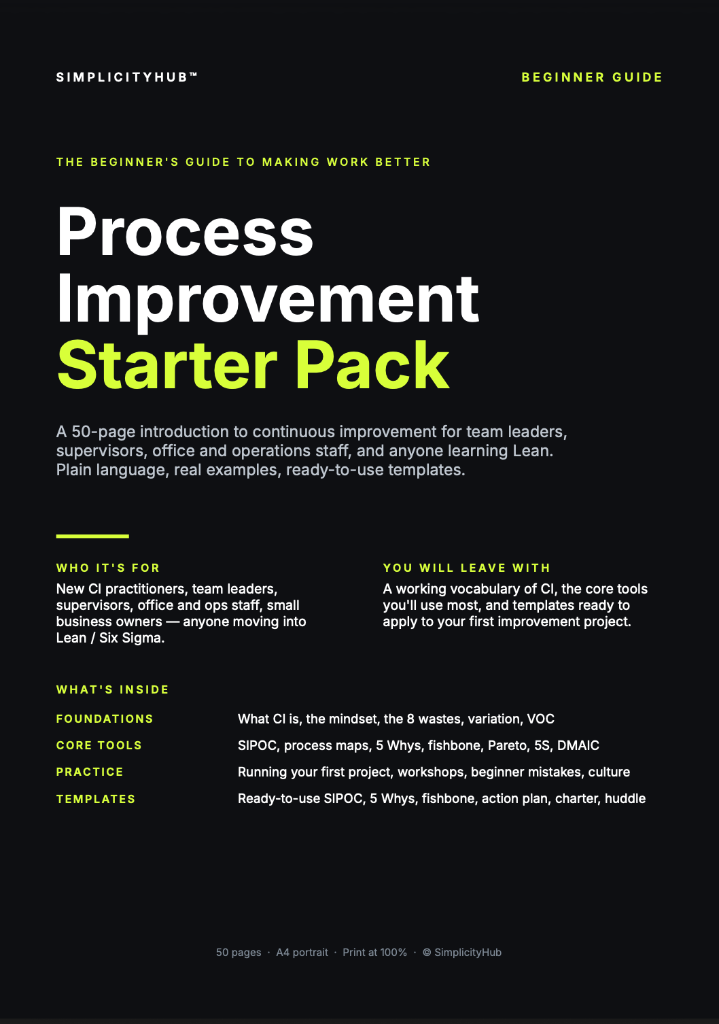
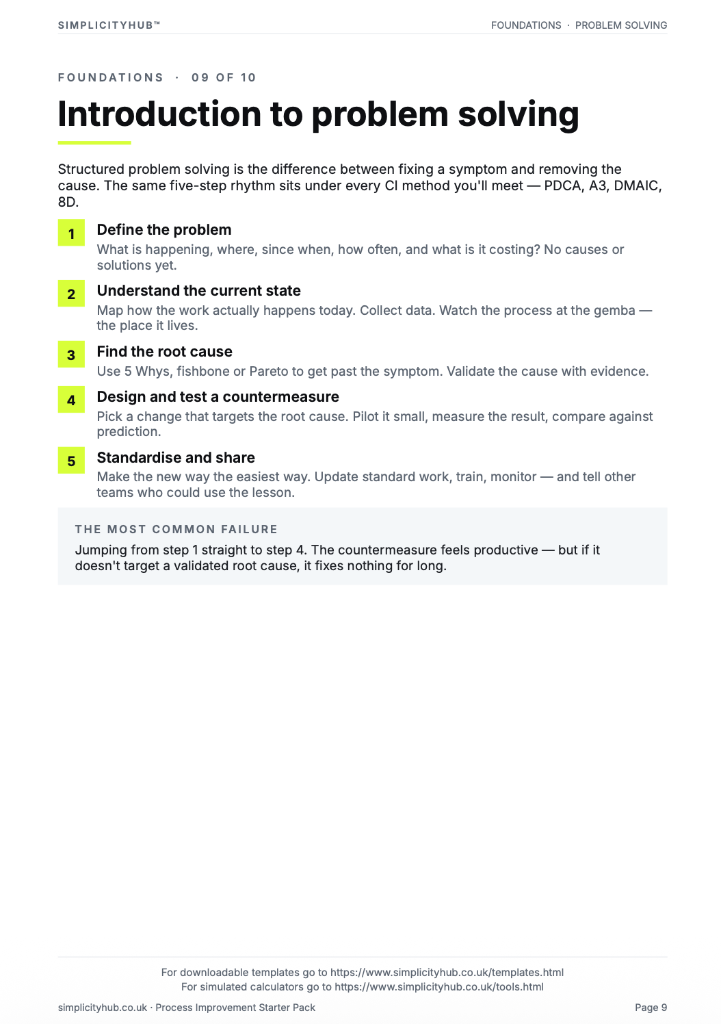
Process Improvement Starter Pack
A starter pack for identifying improvement opportunities, measuring baselines and planning action.
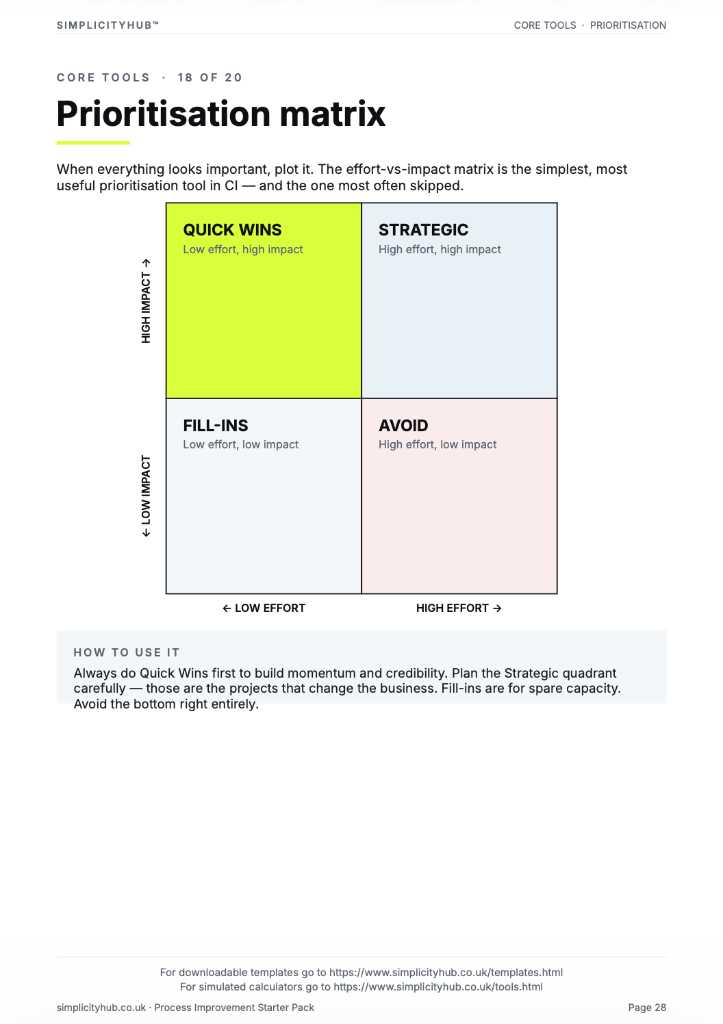
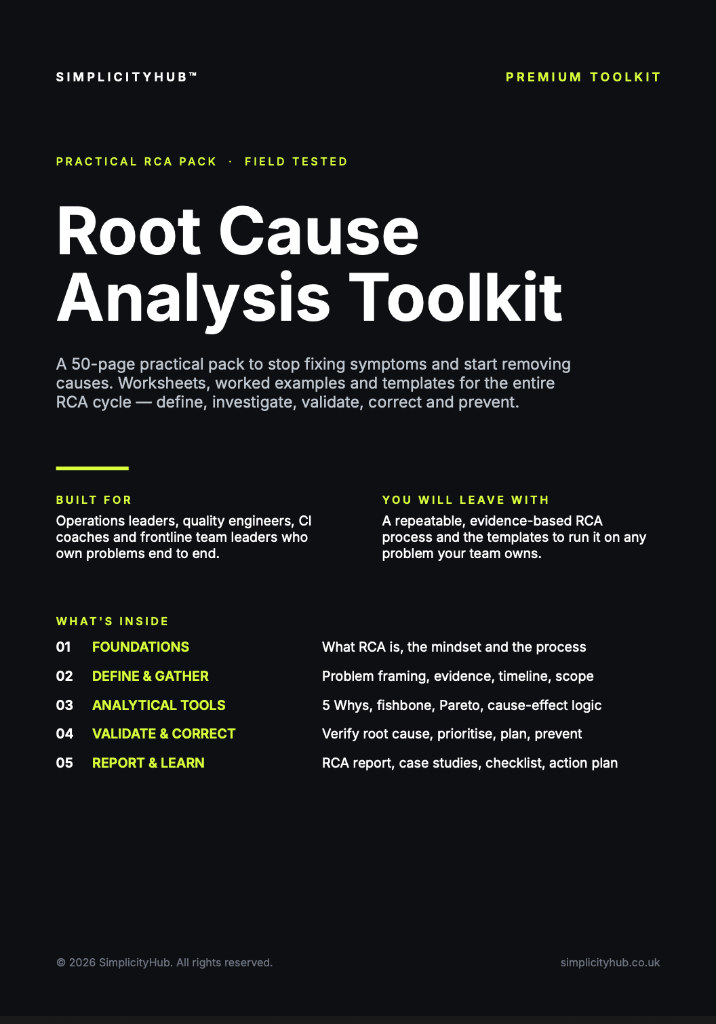
Root Cause Analysis Toolkit
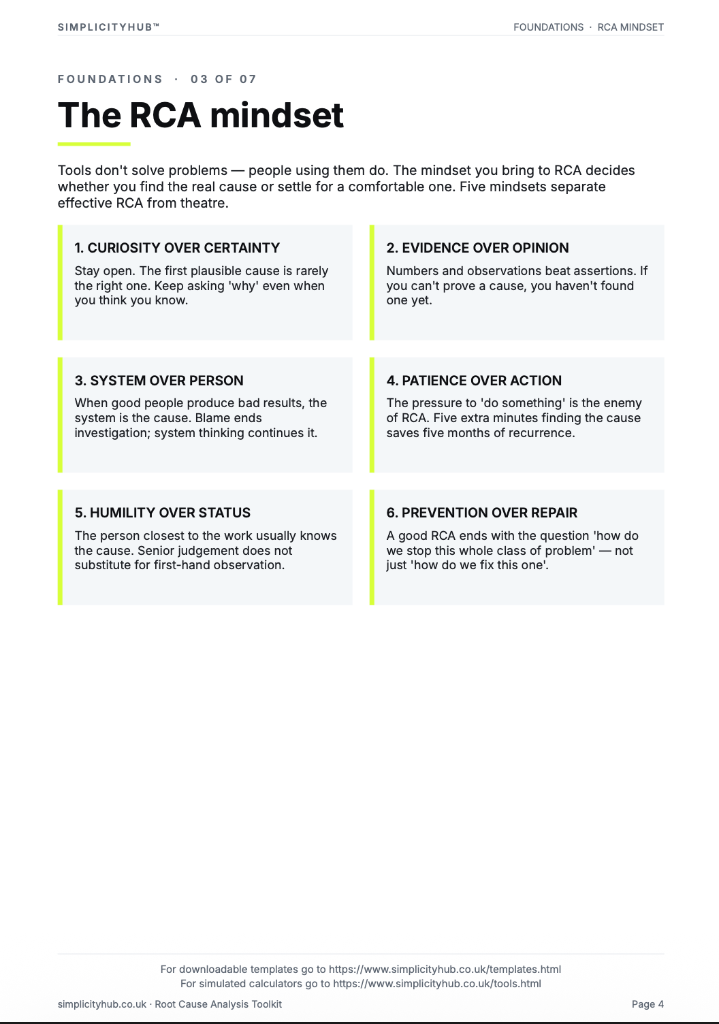
A practical RCA toolkit for defining problems, finding causes, validating evidence and creating action.
A3 Template Pack
A clean A3 problem-solving pack for concise, visual improvement thinking and follow-through.