
What is a Daily Check Sheet Template?
A Daily Check Sheet Template provides a structured form for recording data about process events, defects or observations at regular intervals throughout the day. It is one of the simplest and most reliable data collection tools in the Lean Six Sigma toolkit.
When to use a Daily Check Sheet Template
Use it in the Measure phase to collect baseline defect or event frequency data, and in the Control phase as an ongoing monitoring tool. It works best for counting discrete events that occur regularly throughout a shift or working day.
Who should use a Daily Check Sheet Template
- Operators and frontline staff — recording defects, errors or events as they occur throughout their shift
- Team leaders and supervisors — reviewing daily data to identify patterns and trigger appropriate responses
- Green Belts and Black Belts — collecting structured baseline data during the Measure phase of a DMAIC project
- Quality teams — tracking defect types and frequencies to prioritise improvement focus
Vote yes and we’ll prioritise a quick walkthrough showing you exactly how to use it.
How to use a Daily Check Sheet — step by step
- 1Define what to count
Be specific — 'defects' is too vague. 'Missing label on outbound package' or 'incorrect data entry in field X' is measurable.
- 2Design the check sheet layout
List defect types in rows. Use columns for time intervals (hourly, by shift, by day). Keep it simple enough to complete in seconds.
- 3Brief the data collectors
Anyone completing the sheet must understand exactly what counts as each defect type. Operational definitions prevent inconsistent data.
- 4Place the sheet at the point of work
The sheet should be immediately accessible at the moment the event occurs. Relying on memory produces inaccurate data.
- 5Collect data for a representative period
Typically 2–4 weeks to capture normal variation. Avoid atypical periods (holidays, unusual demand spikes).
- 6Summarise and analyse the data
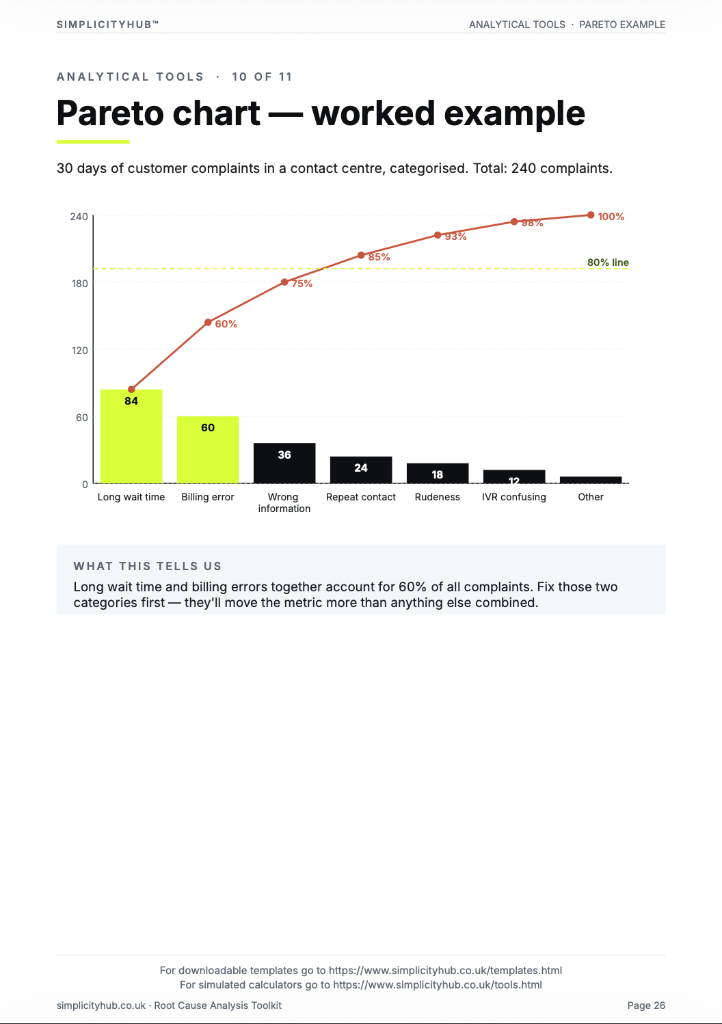
Total counts by defect type and time period. Use a Pareto chart to identify the most frequent categories.
- 7Act on the findings
Feed the top defect categories into your root cause analysis. The check sheet tells you what — the 5 Whys tells you why.
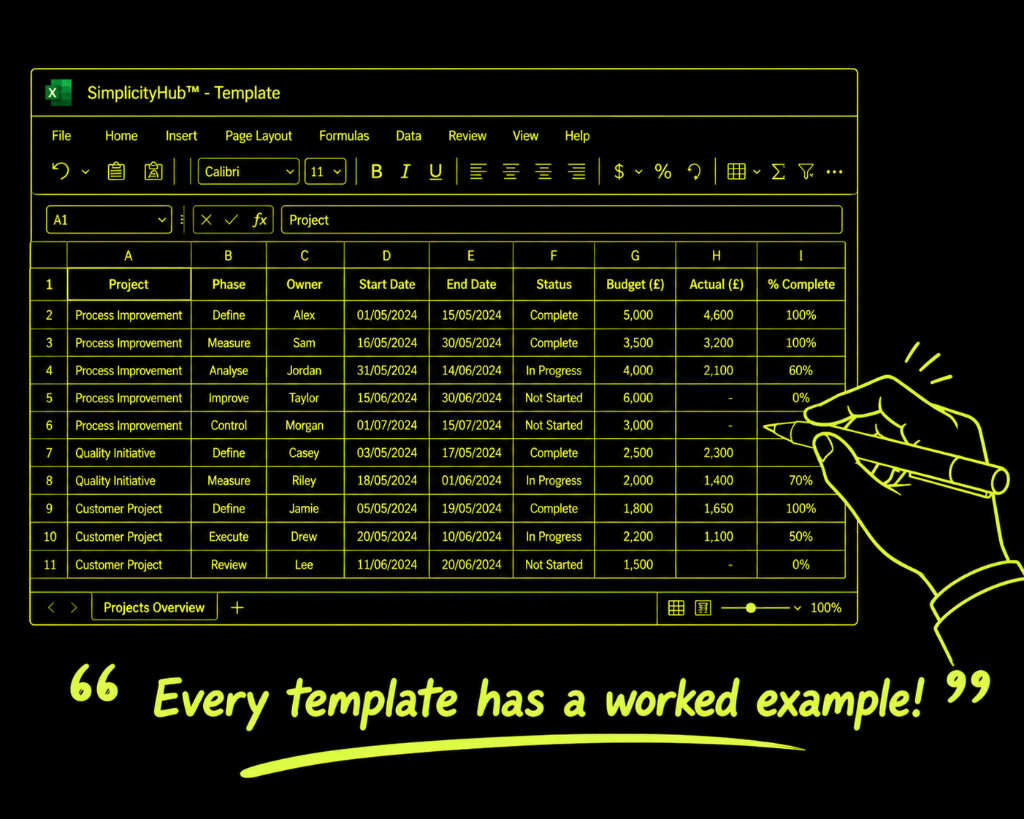
Worked example — Order Entry Error Tracking
An order processing team used a daily check sheet over 3 weeks to record 5 error types. The data revealed that 'wrong product code' accounted for 61% of all errors and occurred most frequently in the first hour of the shift — directing root cause analysis precisely.
Common mistakes — and how to avoid them
Too many defect categories. More than 8 categories makes the sheet hard to complete quickly. If you have more, group them into broader types and use a separate sheet for deep dives.
Completing it retrospectively. Check sheets completed at end of shift from memory are unreliable. The data must be recorded at the moment the event occurs.
No operational definitions. Without agreed definitions, different people count different things. Define exactly what qualifies as each defect type before data collection begins.
Collecting data but not acting on it. A check sheet with no analysis and no action is a waste of time. Plan the analysis before you start collecting.
Tips for getting better results
Use tally marks for speed. A simple tally mark takes less than a second to record. Don't make the completion process slower than the work itself.
Add a 'shift' or 'operator' column. Stratification data (who, when) is free to collect at the same time and dramatically increases the analytical value of the sheet.
Review the sheet design after week 1. The first week of data often reveals that categories need splitting, merging or redefining. Build in a design review before committing to the full collection period.
Frequently asked questions
Check sheet vs checklist?
A checklist confirms tasks are done. A check sheet collects data at the point of work for later analysis.
How should it be designed?
As simple as possible — completable in under a minute per entry with pre-defined categories.
Who completes it?
The person doing the work — not a supervisor. Point-of-work data is more accurate and timely.
How long should data be collected?
Typically two to four weeks for daily processes.
Advanced Toolkit Packs — available now
Structured, ready-to-use template packs designed for real improvement work. Pick the pack that matches your project and get started straight away.
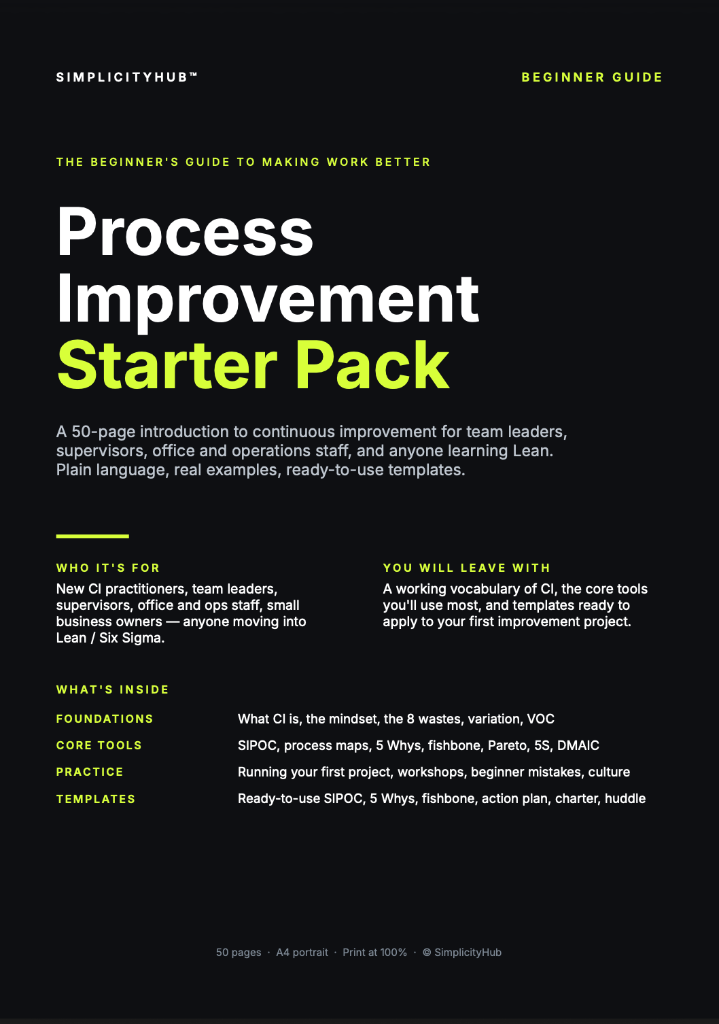
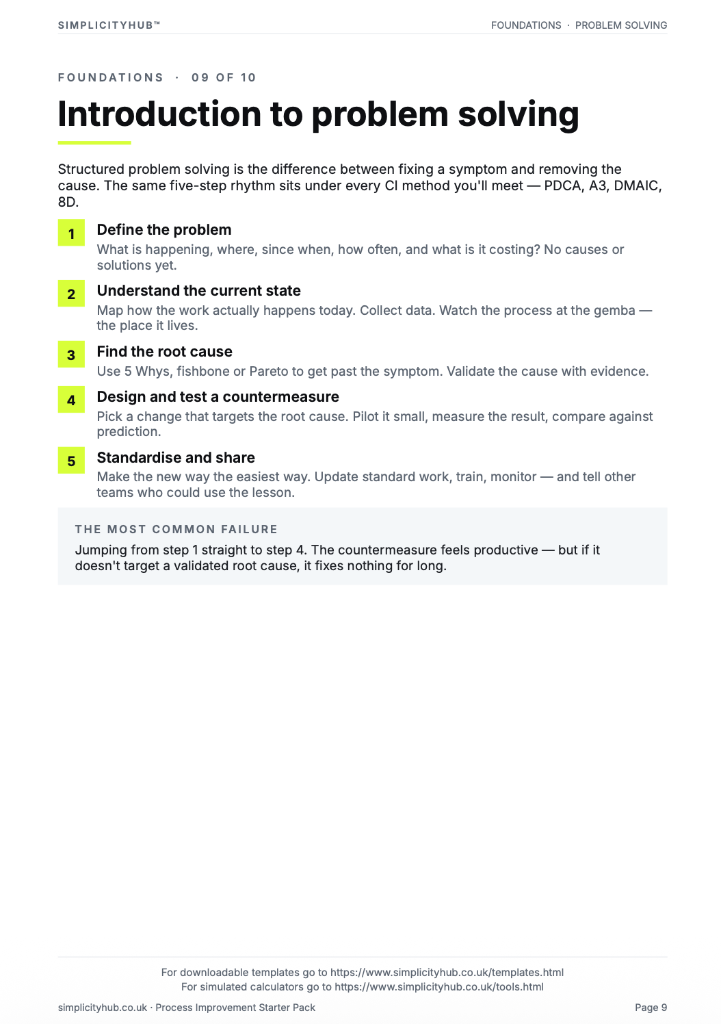
Process Improvement Starter Pack
A starter pack for identifying improvement opportunities, measuring baselines and planning action.

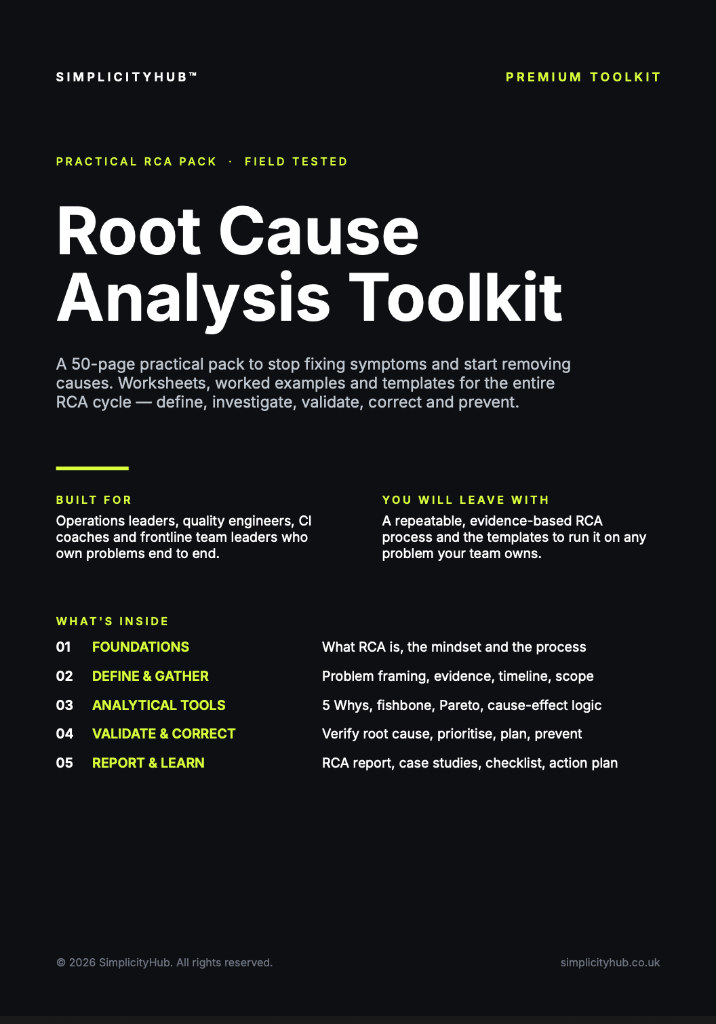
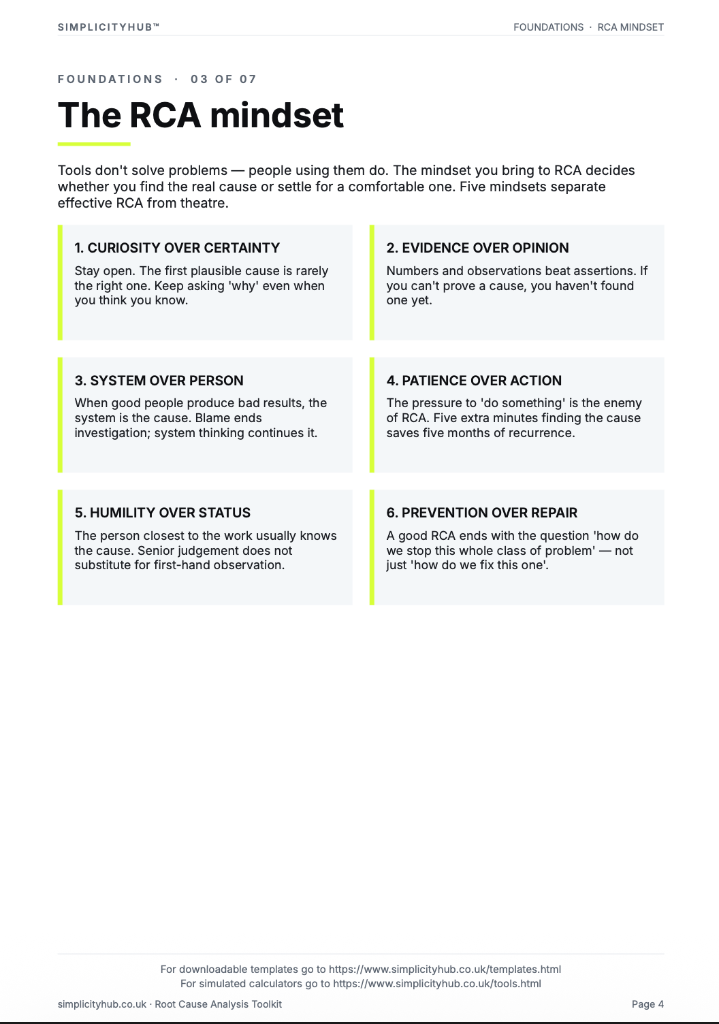
Root Cause Analysis Toolkit
A practical RCA toolkit for defining problems, finding causes, validating evidence and creating action.
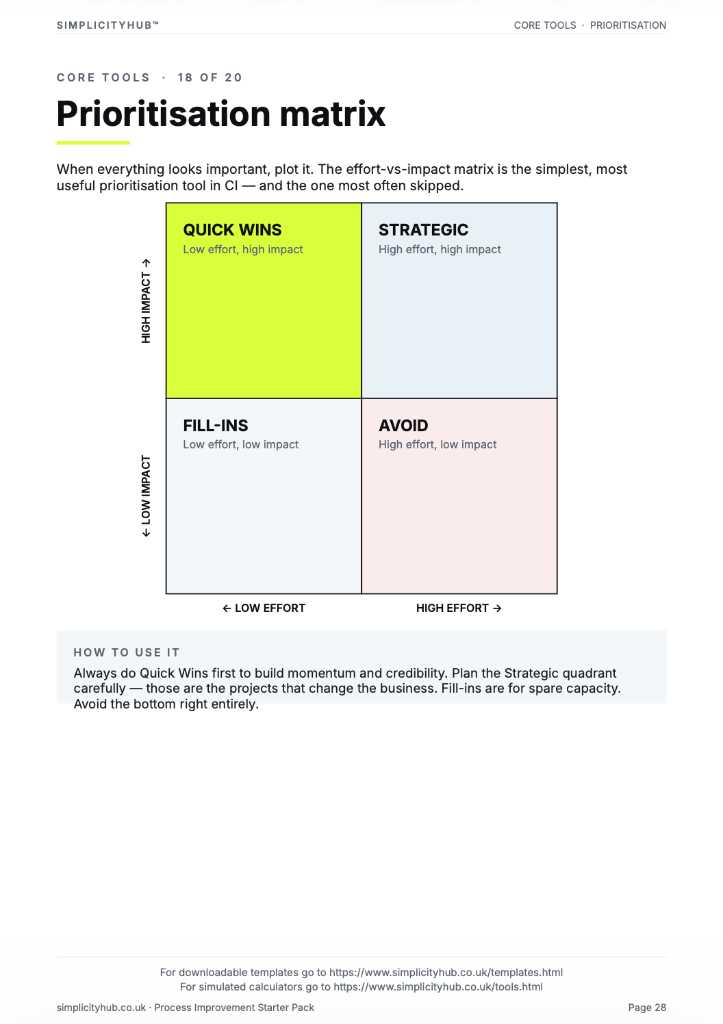
A3 Template Pack
A clean A3 problem-solving pack for concise, visual improvement thinking and follow-through.