What is a Simple Tally Sheet Template?
A simple tally sheet is a structured manual data collection tool that enables frontline teams to count and categorise occurrences — defects, error types, complaint categories, events — quickly and accurately during observation or operational work.
It replaces unstructured note-taking with a pre-defined list of categories and a simple mark-per-occurrence format. At the end of the observation period, counts are totalled and the data is ready for Pareto analysis or frequency comparison.
Tally sheets are used in the Measure phase for structured data collection, and in the Analyse phase for observation-based frequency data gathering.
When to use a Simple Tally Sheet Template
Use a tally sheet when you need to count occurrences of defined categories in real time. Use it when:
- You are observing a process and need to record the frequency of different problem types
- Frontline team members need to record quality or error data at the point of work
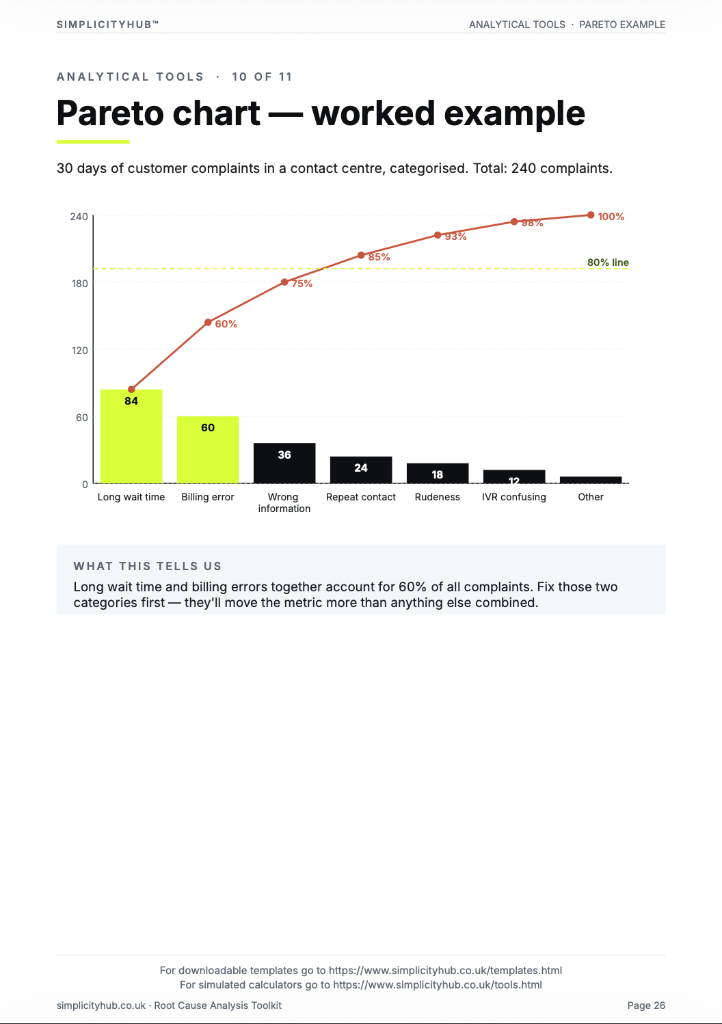
- You want to build a Pareto chart but do not have automated data collection
- A quick, lightweight data collection method is needed that requires no IT system
Who should use a Simple Tally Sheet Template
- All belt levels — the tally sheet is one of the seven basic quality tools and requires no training to use
- Frontline Operators and Team Leaders — for daily quality and error tracking at the point of work
- CI Facilitators — for structured observation sessions during Gemba walks or Kaizen events
- Quality Teams — for manual inspection data collection where automated systems are not available
Vote yes and we’ll prioritise a quick walkthrough showing you exactly how to use it.

How to design and use a Tally Sheet
The tally sheet is only as good as the categories it contains. If a category is missing, events get recorded as 'Other' and the data loses its analytical value. Define the categories before you start collecting.
How to design and use a Tally Sheet — step by step
-
1Define the categories to track
List the specific defect types, error categories or event types to be counted. Include an 'Other' category for unexpected items, but aim to keep it small — if 'Other' dominates, the category list needs revision.
-
2Add a date, time and location header
Record when and where the data was collected. Without this context, tally data cannot be stratified by shift, day, machine or team.
-
3Add an observer name
Record who is collecting the data. Consistent data collection across observers requires knowing which records came from which person — different collectors may classify borderline cases differently.
-
4Draw the tally grid
Create a row for each category and columns for tallying. Use the traditional five-bar gate method (four vertical lines then a diagonal): this makes it easy to count in groups of five.
-
5Collect and tally in real time
Mark each occurrence immediately as it happens — not from memory at the end of the shift. Memory-based tally sheets are unreliable and undercount less common event types.
-
6Total and summarise at the end of each observation period
Count the tallies for each category and record the total. Calculate the percentage each category represents of the total count.
-
7Transfer to a Pareto chart
Sort the categories from highest to lowest and build a Pareto chart. The tally sheet data is the input; the Pareto chart is the analysis output.
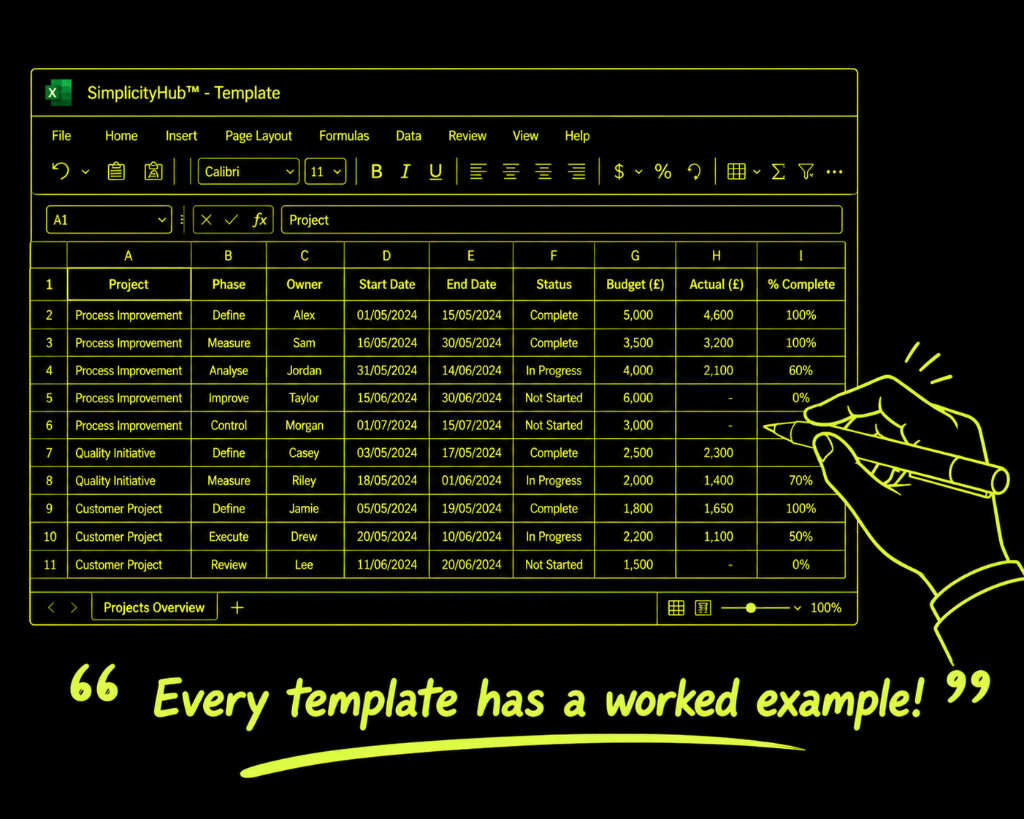
Worked example — Customer Complaint Tally Sheet
A completed tally sheet for customer complaint types across one week, showing five categories tallied by shift with totals and percentage breakdown ready for Pareto analysis.
Common mistakes — and how to avoid them
Too many categories. A tally sheet with 20 categories is hard to use in real time. Keep it to eight or fewer. If you need more categories, run a stratified collection with separate sheets for different sub-groups.
Completing from memory at end of shift. Memory-based tally sheets consistently undercount infrequent categories and overcount the most memorable ones. Tally at the moment of observation.
No 'Other' category. Without an 'Other' category, events that do not fit the defined categories either go unrecorded or are forced into the wrong category. Include 'Other' and investigate what ends up there.
Not piloting the category list. Run the tally sheet for half a shift before committing to a full data collection period. Check that the categories cover the reality you observe and that the sheet is practical to use at the workstation.
Tips for getting better results
Laminate it for repeated use. A laminated tally sheet with a wipe-clean marker is practical for workstations where paper gets dirty or wet. It also signals that the team expects to use it regularly.
Display completed tally sheets on the team board. A daily tally chart posted on the team board makes quality data visible to everyone — not just the project team. This builds awareness and often prompts the team to raise issues they previously considered normal.
Use stratified tally sheets for richer data. Run separate tally sheets for different shifts, machines or operators. Comparing tally data across these dimensions can reveal patterns that a single pooled tally hides.
Download the Simple Tally Sheet Template
A clean, editable Excel template for immediate use — structured, professional and ready to fill in.
Frequently asked questions
When to use a tally sheet?
When counting discrete events at the point of work — defects by type, calls by reason, errors by category.
How many categories?
Five to ten. Group low-frequency types into an Other category.
Should categories be agreed in advance?
Yes. Pre-defining prevents inconsistency in how different people classify the same event.
How long should I collect data?
Two to four weeks for a daily process, covering all shifts and demand cycles.
Advanced Toolkit Packs — available now
Structured, ready-to-use template packs designed for real improvement work. Pick the pack that matches your project and get started straight away.
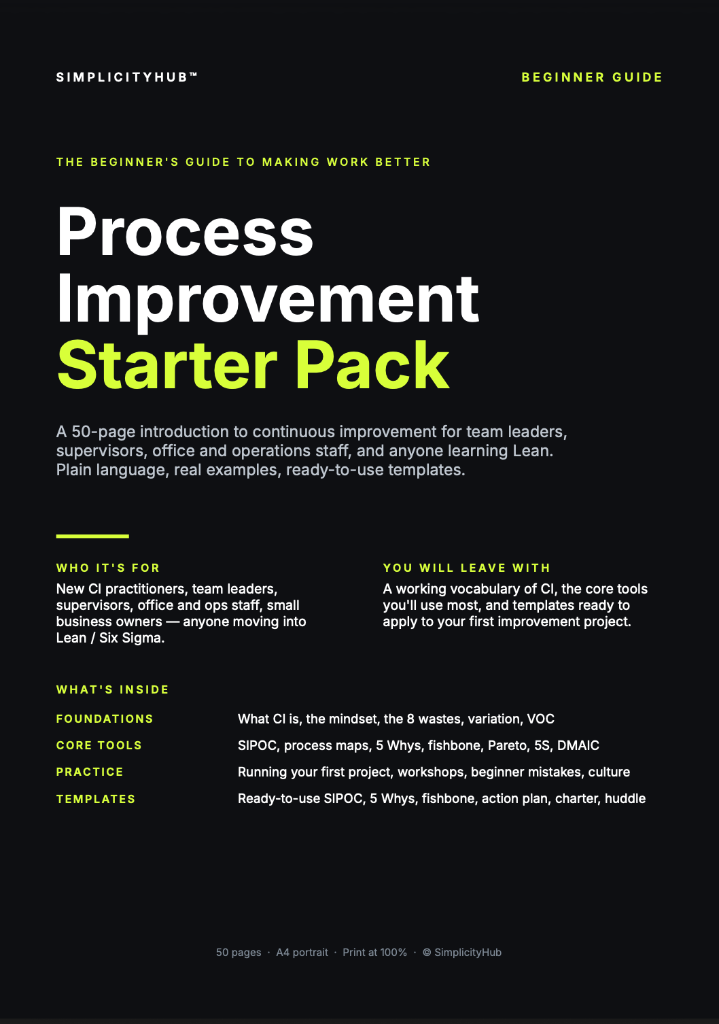
Process Improvement Starter Pack
A starter pack for identifying improvement opportunities, measuring baselines and planning action.
Root Cause Analysis Toolkit
A practical RCA toolkit for defining problems, finding causes, validating evidence and creating action.
A3 Template Pack
A clean A3 problem-solving pack for concise, visual improvement thinking and follow-through.