
What is a Wait Time Tracker Template?
A Wait Time Tracker Template provides a structured log for recording and categorising the time work or customers spend waiting at each step of a process. Waiting is one of the 8 Lean wastes — and making it visible is the first step to eliminating it.
When to use a Wait Time Tracker Template
Use it in the Measure phase to quantify waiting waste as part of a lead time or throughput improvement project. It is a key input to a Value Stream Map and a Lead Time Calculator.
Who should use a Wait Time Tracker Template
- Green Belts and Black Belts — quantifying waiting waste during the Measure phase of a lead time or flow improvement project
- Operations managers — understanding where queues and delays are accumulating in their process
- Service improvement teams — measuring patient, customer or client waiting time as a basis for service redesign
- Value stream mapping teams — capturing wait time data for each process step before building the future state map
Vote yes and we’ll prioritise a quick walkthrough showing you exactly how to use it.
How to use a Wait Time Tracker — step by step
- 1Map the process and identify all wait points
Walk the process end to end. Record every point where work or customers wait — between steps, in queues, in inboxes.
- 2Define what constitutes 'waiting'
Waiting starts when work arrives at a step and ends when active processing begins. Document this definition before collecting data.
- 3Record wait times at each point
Log start and end of each wait event. Use timestamps from system data, direct observation or simple paper logs.
- 4Collect a representative sample
Record at least 20–30 data points per wait location. Span different times of day, days of week and demand conditions.
- 5Calculate average and peak wait times
Mean wait time identifies the typical experience. 90th percentile reveals the worst-case experience your customers encounter.
- 6Calculate the contribution to total lead time
Sum all wait times and express as a percentage of total lead time. This quantifies the waiting waste opportunity.
- 7Prioritise the longest waits for elimination
The wait points with the highest average duration or highest frequency are the first targets for improvement.
Worked example — Patient Pathway Wait Time Analysis
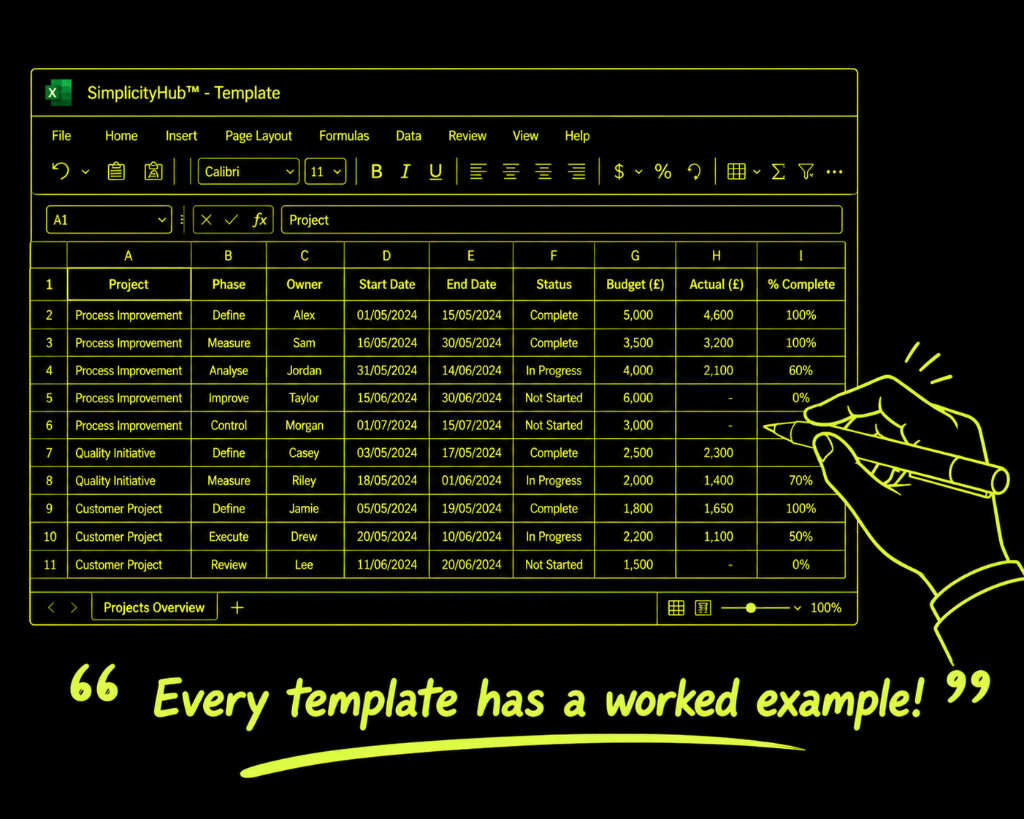
A hospital outpatient team tracked wait times at 6 points in a 47-minute patient pathway — finding that 31 minutes (66%) was waiting, with the longest wait (18 minutes average) occurring between the reception check-in and the clinical room assignment step.
Common mistakes — and how to avoid them
Only measuring wait time at the point of customer complaint. Customers notice some waits more than others. A comprehensive analysis covers all wait points — not just the visible or complained-about ones.
Confusing wait time with process time. Process time is when work is actively being done. Wait time is when it is not. Ensure your data collection clearly distinguishes between the two.
Not measuring at different times of day. Wait times are often highly variable by time of day, day of week or demand level. A single snapshot is not representative.
Collecting data without acting on it. Wait time data is only valuable if it leads to root cause analysis and improvement. Define the analysis and action plan before data collection begins.
Tips for getting better results
Use system timestamps where available. Most workflow and IT systems record event timestamps automatically. Extract this data before committing to manual observation.
Express wait time in customer terms. Saying 'customers wait an average of 23 minutes for approval' is more compelling to stakeholders than 'average queue time is 23 minutes'.
Combine with a spaghetti diagram. Wait time data combined with a spaghetti diagram gives both a time picture and a physical movement picture of the waste in the process.
Frequently asked questions
Why is wait time important?
In most processes wait time accounts for 80-95% of total lead time. Reducing it is often the fastest way to improve response time.
How do I measure it?
Time-stamp items as they leave one step and start the next. The gap is the wait time.
What causes wait time?
Batching, handoffs, approvals, and unbalanced workloads where downstream steps cannot keep up.
Is all wait time waste?
Most is. Some is structural such as curing time or regulatory holds. Focus on waiting driven by process design.
Advanced Toolkit Packs — available now
Structured, ready-to-use template packs designed for real improvement work. Pick the pack that matches your project and get started straight away.
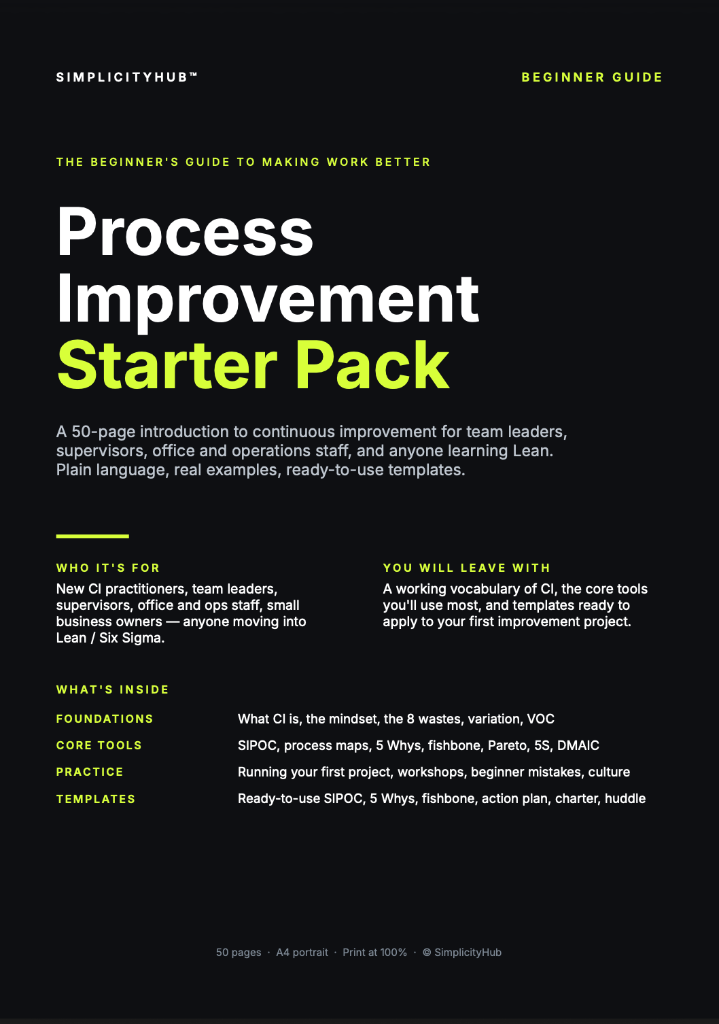
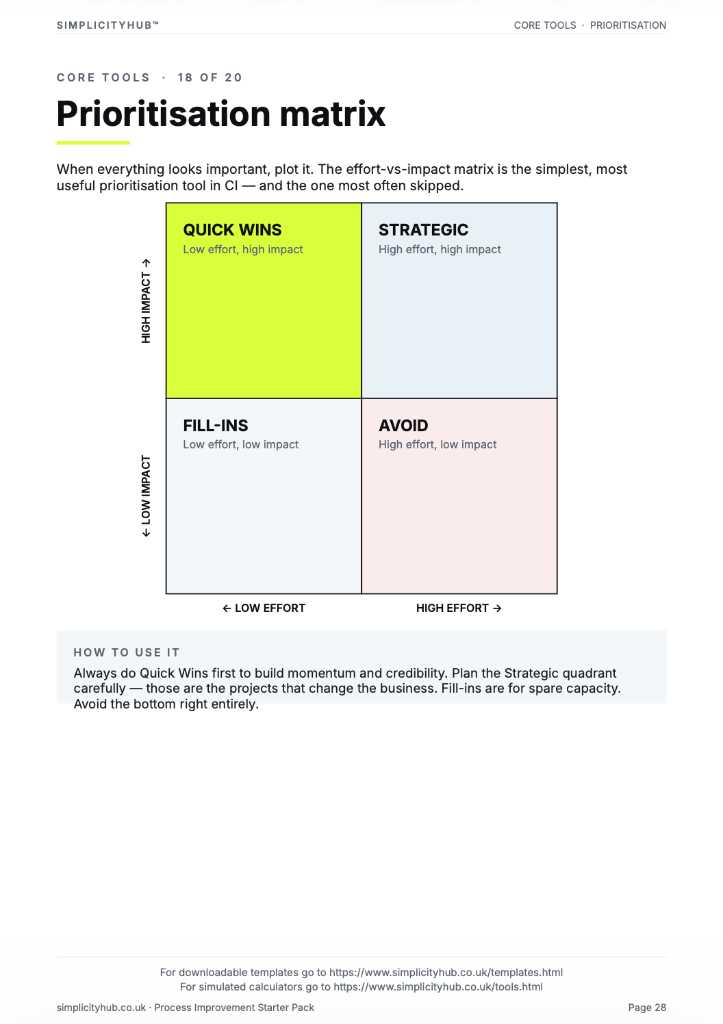
Process Improvement Starter Pack
A starter pack for identifying improvement opportunities, measuring baselines and planning action.
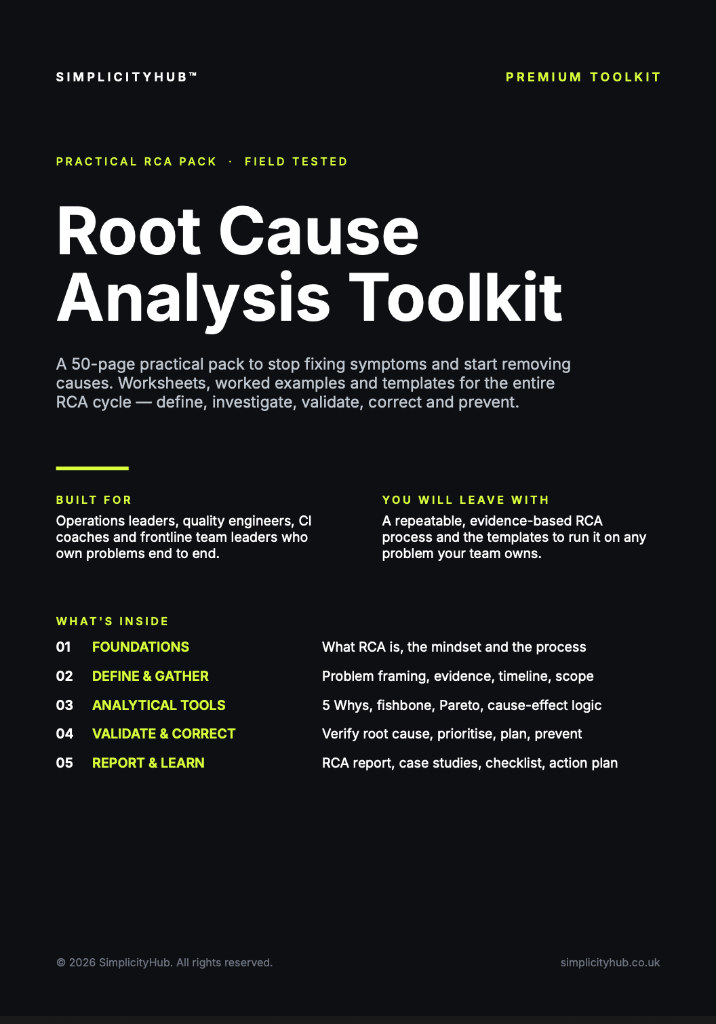
Root Cause Analysis Toolkit
A practical RCA toolkit for defining problems, finding causes, validating evidence and creating action.
A3 Template Pack
A clean A3 problem-solving pack for concise, visual improvement thinking and follow-through.